


The silicone travel bottles have become one of the little things that make travelling easier in the present times. They are lightweight, refillable, flexible, and appear to be the natural improvement of the hard plastic containers. However, in their convenience, the truth that people fail to grasp is that not all liquids that works in your bathroom cabinet are supposed to be in a silicone bottle.
It is not the issue of bad manufacturing or design, but chemical compatibility. Silicone is very good in a wide variety of liquids, though it does have its limits. Some of the ingredients engage the material in a molecular level. Gradually they may result in swelling, stickiness, or leakage which appears out of the blue.
Understanding these reactions helps travelers avoid ruined luggage, wasted product, and unnecessary frustration. This article explains which substances are best avoided, why those reactions occur, and how to choose the right containers for each type of formula.
Understanding Silicone: Strengths and Limitations
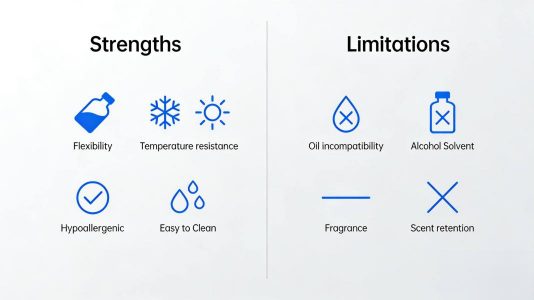
Silicone has been able to gain the reputation due to its ability to be flexible, durable and safe unlike other materials. It maintains its temperature over a large temperature range, both in the cold of an airplane cargo hold and the hot of a summer destination. It is soft to squeeze and hard enough to maintain its shape. It is generally hypoallergenic and easy to clean, making it perfect for shampoos, body wash, or lotions. These features explain why silicone bottles have replaced many hard plastic containers. They help reduce waste, dispense product efficiently, and pack neatly inside carry-on bags.
What Can Damage Silicone
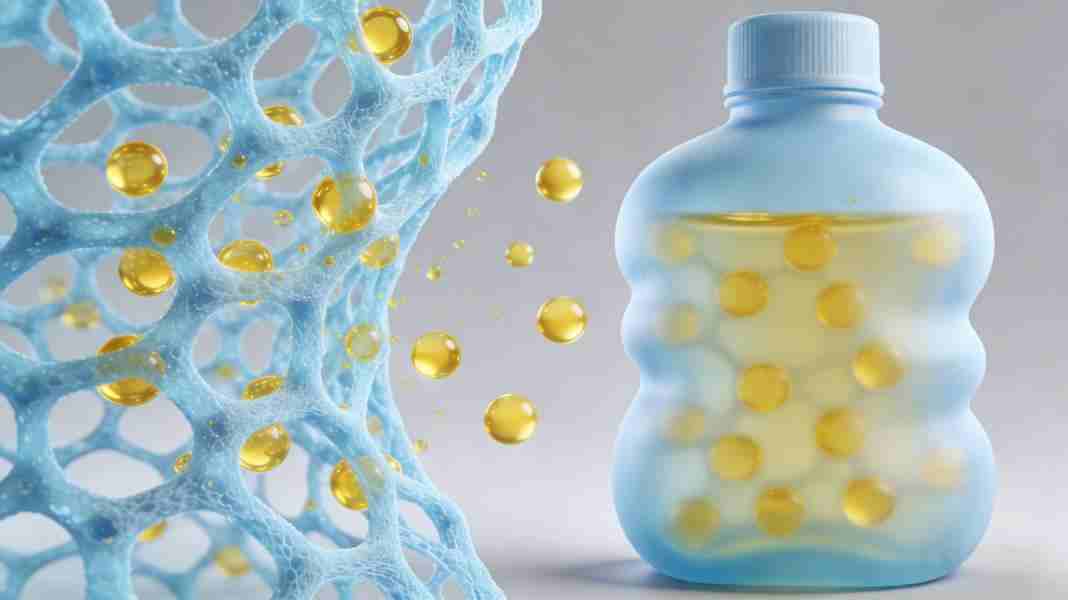
Although silicone can be used in many ways, it is not all-powerful. Studies by material experts like Atlas Fibre, Silclear and Jehbco indicate the existence of patterns of reactions in case of silicone exposure to particular families of chemicals.
The most prevalent problems are:
● Swelling when silicone absorbs oils.
● Softening or loss of elasticity after solvent exposure.
● Gradual dulling or stickiness as chemical residues accumulate.
● Absorption of strong scents or pigments.
● Long-term cloudiness or texture changes.
These reactions are usually gradual and thus a bottle can appear alright in weeks and then all of a sudden it starts leaking.
Substances That Should Not Be Stored in Silicone Travel Bottles
1. Oils and Oil-Based Compounds
Silicone and oils do not get along. Citrus extracts, carrier oils, essential oils, and skincare products based on oil steadily seep into the silicone surface. The bottle becomes a little bigger, becomes less solid and can become tacky. This bloat is what causes the distortion of the cap threads- one of the leading causes why travelers report finding leaks in the middle of the trip.
Examples: facial cleansing oil, hair serums, essential oils, makeup removers.
Preferable option: PET plastic or metal containers which are not affected by oil.
2. Alcohols and Solvent-Heavy Liquids
Silicone can be dehydrated by high levels of alcohol or other solvents. The material is made stiffer and brittle, which lessens flexibility. In the course of time, the cracks can be observed around seams or neck of the bottle.
Examples: perfume, alcohol based toners, hand sanitizers, aftershave.
Preferable alternative: glass or hard plastic bottles.
3. Active Cosmetic Ingredients
Another challenge is powerful skincare actives. Ingredient such as retinol, high strength vitamin C, AHA/BHA acids, and benzoyl peroxide are created to disintegrate oils and exfoliate the skin yet that very ability can likewise disintegrate the polymer chains in silicone. When exposed over a long period of time, it wears into the inside surface and creates hardened residue.
More suitable option: opaque glass or airtight plastic containers which do not oxidize.
4. Thick Pastes and High-Viscosity Products
While dense pastes don't chemically damage silicone, they cling stubbornly to the interior walls. Pastes are not suitable for storage in narrow-necked bottle containers. It is advisable to use wide-mouthed jars for easier filling, use, and cleaning.
Examples: toothpaste, clay masks, heavy ointments.
Better choice: wide-mouthed jars or squeezable tubes.
5. Highly Pigmented or Strongly Scented Products
Due to the fact that silicone is a little porous, the pigments and fragrance molecules may creep into the surface. When that occurs, it is almost impossible to eliminate stains or lingering smells.
Examples: hair dye, self-tanning liquids, colored mouthwash, highly perfumed oils.
Preferable alternative: glass or dark opaque plastic.
Quick Reference Table: What Not to Store in Silicone Bottles
Category | Examples | Why It’s Not Compatible | Better Container |
Oils | Essential oils, hair serums | Causes swelling and softening | PET or metal |
Solvents | Perfume, hand sanitizer | Reduces elasticity, may crack | Glass or rigid plastic |
Active skincare | Retinol, vitamin C, AHA/BHA | Breaks down silicone structure | Glass or airtight plastic |
Thick pastes | Toothpaste, clay masks | Leaves residue, hard to clean | wide-mouthed jars or squeeze tubes |
Pigmented liquids | Hair dye, self-tanner | Stains and retains odor | Glass or opaque plastic |
Safe Use Guidelines for Silicone Travel Bottles
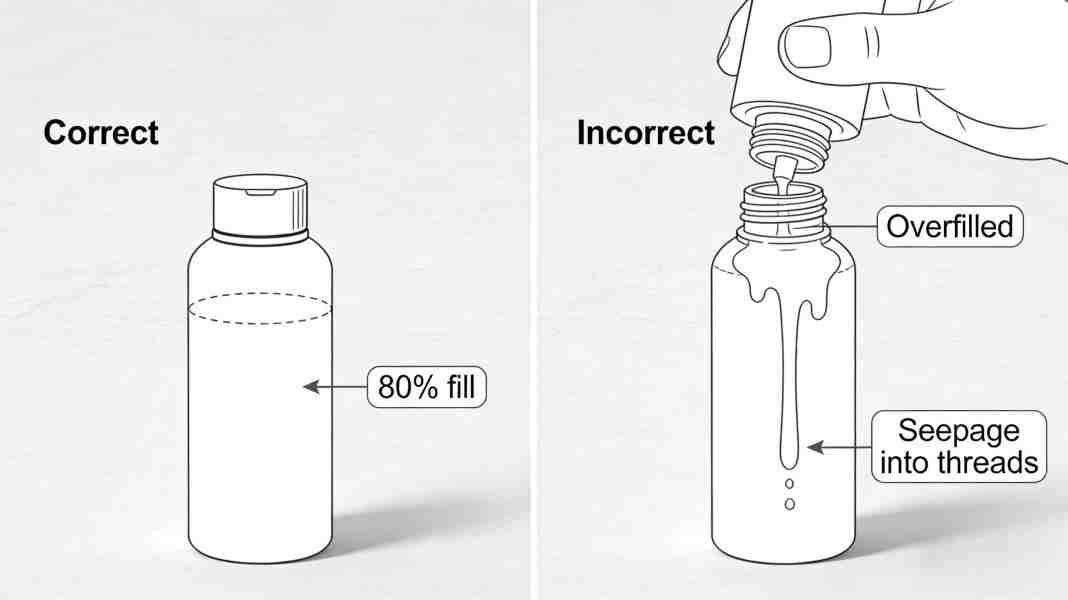
Filling and Closing Properly
No matter what, there should be a little air left at the top of the bottle. Liquid can be pushed up during flights because of variations in air pressure, and can break the seal. Do not over fill and do not squeeze the bottle when closing it, this can push product into the cap threads and cause leaks later.
Choosing the Right Products for Silicone
● Silicone performs best with water-based formulas:
● Shampoo and conditioner
● Body wash or shower gel
● Light lotion
● Mild face cleanser
These rinse cleanly, don't alter the silicone surface, and maintain flexibility over time.
Cleaning and Maintenance
Rinse the bottle under warm water and mild soap after use. In case the product had oil or fragrance, then repeat the second rinse. Do not refill without cleaning completely; the residue may become mixed with the new formulas and change consistency.
Knowing When to Replace
Even the best silicone eventually shows wear. Replace the bottle if it:
● Feels sticky or oily to the touch.
● Loses shape or becomes cloudy.
● Holds persistent odor.
● No longer seals tightly.
These are early signs of chemical stress or material fatigue.
Common Misconceptions About Silicone Travel Bottles
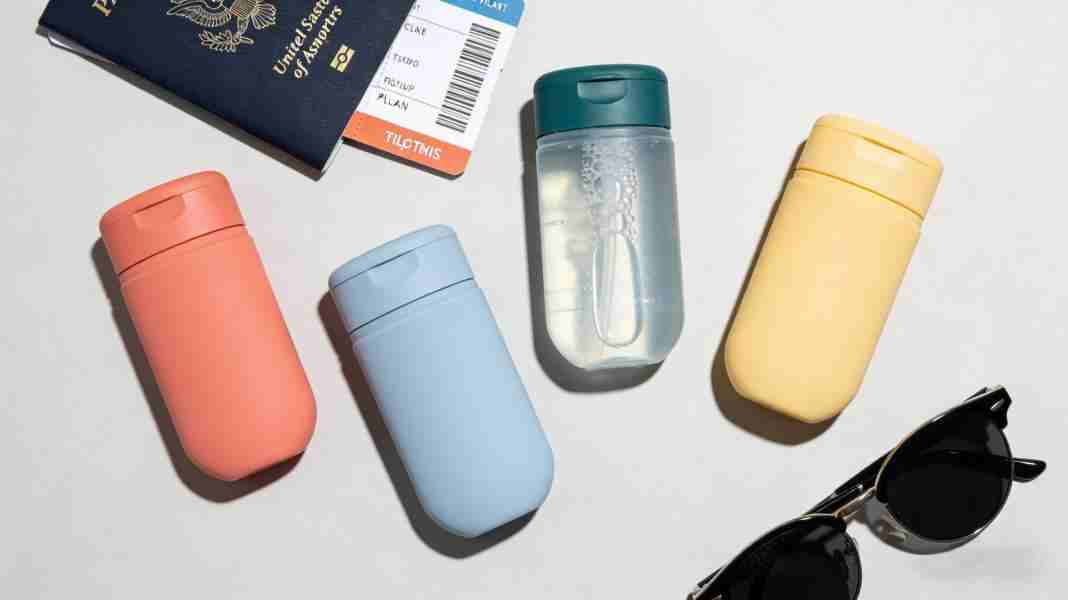
The misunderstandings regarding silicone travel bottles are normally as a result of how familiar silicone feels. It is soft, flexible, and heat tolerant, so many travelers assume it behaves like a universal container. In practice, its performance depends entirely on what is stored inside. These are the misconceptions that lead to most real-world problems.
Misconception 1: "Silicone is compatible with everything."
This is a notion that is held as silicone works very well with water-based recipes and does not melt, crack or discolour easily. But it is much more subtle than chemical compatibility. Silicone is a porous polymer with open channels where some molecules especially oils, solvents and fragrance compounds can pass through the material over time.
When that occurs, two kinds of damage start;
● Physical swelling as oils diffuse into the silicone structure.
● Softening and loss of elasticity when strong solvents erode its polymer network.
These are changes that occur at a slow pace. Travelers may fill a bottle with cleansing oil in January and notice no problem until March, when the cap suddenly refuses to seal or the bottle feels tacky. The issue isn't the quality of silicone, it's that the material wasn't designed to store oil-heavy formulas.
Misconception 2: "Leaks mean the bottle was poorly made."
It is natural to attribute the blame to the container when a leak occurs during transit. However, during controlled testing, the majority of leaks are found to be due to the deformation of the materials rather than the manufacturing errors.
And this is what normally occurs:
● The bottle slowly absorbs oils or solvents.
● The neck of the bottle expands just slightly, often less than a millimeter.
● That tiny distortion prevents the threads from aligning with the cap.
● Under the pressure of air travel, liquid escapes through the imperfect seal.
Even a high-grade silicone bottle cannot maintain a seal once the geometry shifts. The cap may still twist on, but the airtight barrier is gone.
Misconception 3: "Silicone is ideal for long-term storage."
Silicone is a good material to use in short-term applications, such as weekend outings, carry-on flights or a couple of weeks of travel but not for long storage of most liquids. After several months of a product being in a silicone bottle, one of the three things tends to happen:
1. Slow absorption: Oils and active ingredients are transported slowly inwards altering the surface texture.
2. Residue buildup: Even water-based formulas can leave a thin film after prolonged contact, especially lotions or conditioners.
3. Scent retention: Silicone holds fragrance compounds resulting into bottles that are permanently scented by what was once in them.
Empting and washing of the travel bottles should be done after the trip. Glass or high-barrier plastic is more stable and safe in the case of at-home storage of products that are infrequently used.
Misconception 4: "If a product is labeled 'travel size,' it is automatically safe for silicone."
Many travelers assume that if a manufacturer sells a product in a small bottle, it must be universally container-friendly. But travel size only refers to volume, not compatibility. A travel-sized bottle of retinol or essential oil behaves the same way chemically as the full-size one.
Travelers often transfer reactive formulas into silicone thinking "the company sells a mini version, so this must be fine," but the packaging chosen by the brand is usually glass or barrier plastic for a reason, chemical stability.
A Practical Framework for Travelers
Before filling a bottle, ask four simple questions:
● Is this product water-based or oil-based?
● Does it contain alcohol or other solvents?
● Is it a highly active cosmetic formula?
● Is it thick, pigmented, or fragrance-heavy?
If you answer "yes" to any of the last three, choose another container. This quick check prevents most common travel-bottle failures.
Conclusion
Silicone travel bottles made of silicone are durable, flexible and safe when used as intended. They can do a wonderful job with water based toiletries but are not constructed to suit all products. Solvents, reactive components and oils will eventually weaken the material resulting in leaks or sticky residues that can be easily confused by the travelers as defects.
The right formula in the right container will prolong the life of your gear, keep your luggage clean and make your travel bottles work as they should. A small dose of chemical awareness can save a trip from messy surprises.
KEAN specializes in manufacturing silicone containers having controlled curing, constant formulation and exact sealing design, which directly affect the longevity of use and reliability.


